Showing posts with label Fantasy. Show all posts

Wednesday, March 7, 2018

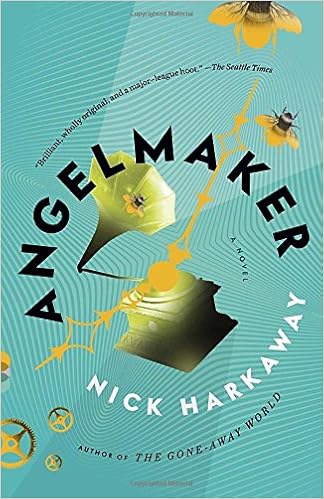
Angelmaker

After The Gone Away World took the spot for my favorite book read in 2014, I knew it was only a matter of time before I read the rest of the books by Nick Harkaway.  Angelmaker is in no way related to the The Gone Away World but it is absolutely its spiritual successor.

Angelmaker is to thriller detective stories what The Gone Away World was to post-apocalyptic sci-fi stories.  It takes a lot of the absurdist elements of his previous work, reins them in just a tiny, tiny bit, and casts them into a noir setting.


Angelmaker takes a little bit to get going and its absurdism dulls the thriller elements a tad (a tradeoff well worth it in my opinion) but it absolutely has some great payoffs.  Some fun moments include James Bond as an eighty year old woman, a heroic elderly pug, a clockmaker as the protagonist, and of course, a layered and thoroughly absurd conclusion.

When I finished it, I thought that it had perhaps a higher average quality throughout the book than The Gone Away World but lower highs but I also like sci-fi more than thrillers so someone with the reverse preferences might disagree.

Overall, I would give this book an 88%.

Friday, August 14, 2015

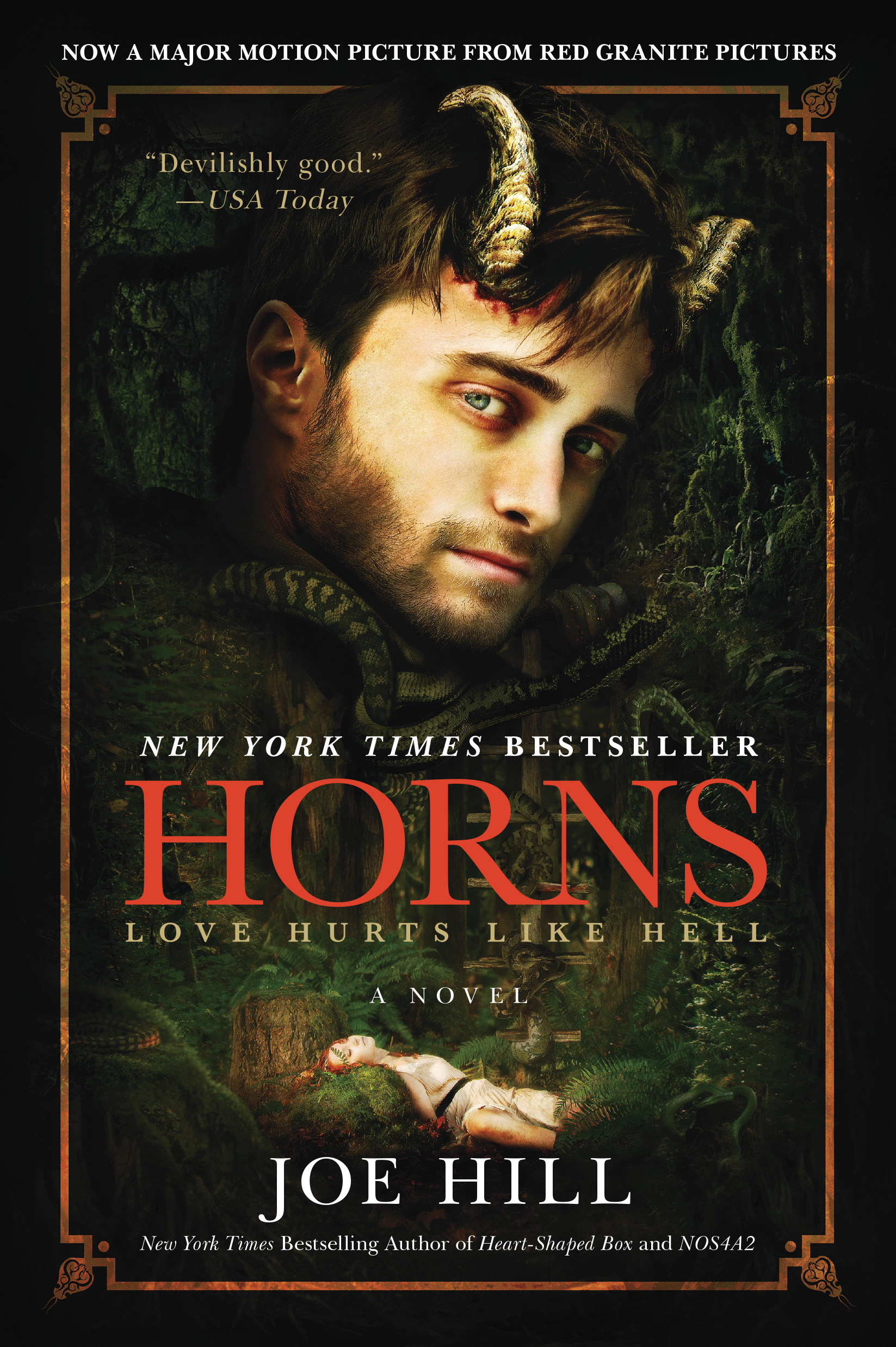
Horns

Horns was a book that spiked in popularity last year due to a movie based it that starred Daniel Radcliffe.  I didn't actually see the film but I read the book because a friend had and wanted to discuss it.


The basic plot is that the protagonist wakes up one morning with, you guessed it, horns.  He quickly realizes that these horns have powers that affect the people around him and much of the book is an exploration of those powers.

Horns' protagonist, while not fundamentally unlikable, generates a lot of pity.  He has lived a rough life and, as such, doesn't use his powers in the best possible way.  However, he shies away from being completely evil, avoiding my complete disgust,

The book was billed as a horror story but there isn't really very much scary stuff going on.  Instead of keeping you up at night worrying someone will come after you with a hacksaw, you are more likely to be kept up wrestling with the worst of human nature.  (Despite what I said about a lack of actual scary parts, there is one place where the reader is reminded that the brain is a physical object that can be damaged without being destroyed, a concept that always troubles me.)

The book also has a quote that I really enjoyed. "When the world comes for your children with its knives out, it is your job to stand in the way.  Everyone knows that."  This quote, while it comes at a trying time in the book, is representative of the parent I want to be when taken out of context like this.

To summarize, while this book has an interesting concept or two, there isn't really that much special there,  It sits squarely in the no man's land between good and bad, without making huge leaps towards either side.

Overall, I would give this book an 81%.

Wednesday, August 13, 2014

The Sandman

Blogger's note: While I normally write only on the full length prose books that I read, I am taking an exception to write about comic series in this post and the next one then we will back to regularly scheduled programming (until I read another thing that isn't a full length book that I really like).

The Sandman is considered by a lot of people to be the best comic series of all time.  I am not sure that I am willing to endorse it that heavily (Y: The Last Man and Lucifer beat it in my mind) but it is certainly good and contains some awesome concepts.  The series ran for 75 issues from 1989 to 1996 and spawned numerous spin offs including a miniseries, Overture, which is still running today.  I got a collection of short stories set in the universe which piqued my interest and, after ruminating on it for a while, I splurged and bought a nice two volume hard cover collection.


This picture can't really do them justice but each of these books is more than 1000 full color pages of comics.  I have never had a comic book this large before and when you don't have to stop for issue breaks it really helps get the feeling that is one contiguous story... or that would be the case if it was one contiguous story. 

The series is about the seven "Endless," Dream (the titular main character), Destiny, Desire, Despair, Destruction, Delirium, and Death (the last two were my favorites), who are slightly less than gods and represent the concepts that they are named after.  The series is a collection of short stories that range from one to twelve issues long involving Dream and other Endless but a lot of the time some normal person will be a main character and it is about how the Endless interact with them.

Most of the stories tie together into later stories in the series and as such they build the world in a subtle and gradual way, which is nice.  I just feel like they didn't do enough with the concept and the characters (which I guess just shows why spinoffs are still going).  Several of the Endless, especially Death and Delirium, really resonated with me and I wish I could have seen more of those characters and with a quick google search you can see that Death resonated with a lot more people than just me.

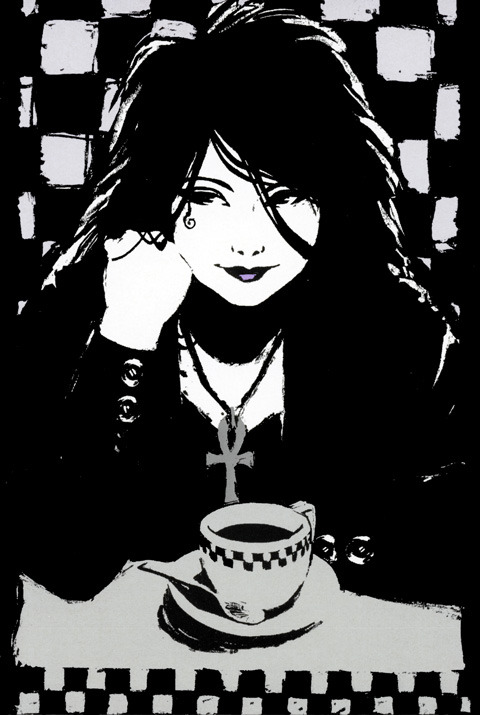
Death is a vaguely gothic looking girl who is almost always smiling.  She doesn't smile sadistically but in a friendly, companionable way.  I can't describe why I like her better than one of the characters from the series does: "It would be really neat if Death was somebody and not just nothing, or pain, or blackness.  And it would be really good if Death could be be somebody like [her].  Somebody funny, and friendly, and nice,  And maybe just a tiny bit crazy."  So often Death is intimidating, it is refreshing and nice to have a kind Death for once.


Overall, I would give this series a 94%.

P.S.: If this post makes you curious about the series, I recommend you pick up Sandman: Endless Nights.  That is what I started on and if you like that you will like the rest of the series.

P.P.S.: While some people disagree with me, I am of the impression that the last issue of the series is out of place and takes away some of the impact from the end.  If you are reading the series I recommend that you read issue #75 in between issues 56 and 57 and end the series on 74.  While there are some aspects of 75 that make it a suitable ending, there are a lot more that are not.

Friday, April 18, 2014

Hard-Boiled Wonderland and the End of the World

The first (and only before this) Murakami book I read was 1Q84.  It was not a great book.  It had a lot of unresolved questions at the end and yet also spent a lot of time on things that didn't really matter.  It was a good 400 page book hiding in the midst of 1100 pages.  Then someone recommended Hard-Boiled Wonderland and the End of the World to me.  The title sounded interesting and I thought that I could give Murakami one more go.  Boy, am I glad I did.


The book has the unique trait of being almost two books in one.  The odd chapters are in "Hard-Boiled Wonderland" and the even numbered chapters are at "The End of the World."  It is not even clear at first how the two stories are related or even if they are at all.  But the two stories are different even in tone so it really feels like you could be reading two different books.

I read that Hard-Boiled Wonderland was slightly inspired by Raymond Chandler and I can definitely see that.  I am a fan of that style of fiction (though I have read more Dashiell Hammett and The Thin Man is great) but this takes it and mixes it with a sort of semi-futuristic experience. Also, unlike those stories, it isn't as much about detective work as it just is sort of the tone of the story is similar to those types of books.

The End of The World, on the other hand, is a subdued, slightly fantastical story.  It has several interesting concepts but there is a lot of symbolism that ties into the other story which really is probably the most interesting part.

This book has a lot of the problems that 1Q84 had: seemingly random pointless details and plot threads that don't go anywhere but this book handles it a lot better.  Possibly because it didn't have 1000 pages to get my hopes up that some of them were going places.  In this book they were slight defects, in 1Q84 they were borderline deal breakers.

I think that the part of this book that will stay with me the longest after I have read it is its discussion of consciousness and the unconscious mind and how they interact.  At the end of the book there are some great points to think on (that I would not dare to spoil here).  Suffice to say, I quite liked this book.

Overall, I would give this book a 96%.

Saturday, March 22, 2014

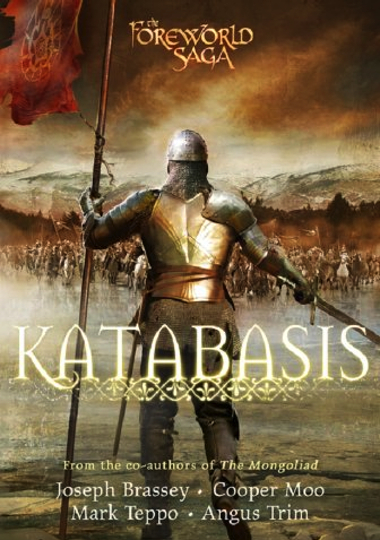
Katabasis & Siege Perilous

At the end of the first three Mongoliad books, the main plot has been resolved but there are a few and fertile ground for imagining what happens next to the  surviving characters (spoilers: some people die).  The following two books, for the most part, answer those questions though not always satisfactorily.  Also, I was partially through the fourth book when I realized that they had lost Neal Stephenson and Greg Bear as authors and the fifth book is only by one author (E. D. deBirmingham) and not even a collaboration like the other four.

 
Katabasis, the fourth book, wraps up the story of the shield brethren (yes, there are shield brethren in the 5th book but they are not the focus).  There are definitely some great battles and fight scenes, which was what originally drew me into the first Mongoliad book, this one seems somewhat lacking in the epic scope of the first three.  Also, it was primary about infighting between various factions of the western world and it made all the efforts of the previous books to force the mongols back seem a little pointless (however, I am sure that they did meticulous historical research and this resembles what happened in the period).

At the end of the big battle one of the characters gives a speech that I won't post here because it contains minor spoilers but it is a good speech and concludes with the line "Let us live my friends, and by living keep alive our hope for a world made better by our presence in it."  I particularly liked that line.


Siege Perilous provides (more of) a conclusion to the Rome plot lines in books 2 and 3 which were basically ignored in Katabasis.  The story is based on the siege of the Cathars in France but, as always, our protagonists make an appearance.  Once again, there was some good combat but most of it was seen from the viewpoints of people not directly involved.  However, from a historical perspective this one felt more interesting than the other, perhaps because I knew a little about the siege before I read the book.  Probably the most annoying part of the story was the end where they resolve one plot point by saying, almost literally, "That is a story for someone else."

Both of these trend towards a more fantastical story than the historical fiction that originally interested me.  I have it difficult to believe that there were various magic elements permeating history it breaks my suspension of disbelief every time an, generally subtle, implication of magic occurs.  They are definitely a continuation in the spirit of the first three books but I don't think that they really needed a direct continuation.

Overall, I would give these two together an 82%.

Saturday, March 8, 2014

The Princess Bride

I am, as you may have guessed from the books I read, a big fan of The Princess Bride the movie.  The blend of romance and action and witticisms are highly entertaining.  I could fill an entire blog post with things I love from that movie.  I think my first introduction to it was at a Star Wars convention where Nick Gillard, the choreographer for all the lightsaber fights in the prequels (whatever you say about the prequels, it is hard to complain about the lightsaber fights), said that the fight between the man in black and Inigo Montoya was his favorite fight in cinema.  I filed this factoid away and, when I finally saw the movie, did enjoy the fight and the rest of the film.

However, this is not review of the movie, this is a review of the book, which came before the movie.  Unlike many movie adaptations of novels, the author actually worked on the screenplay of the movie as well.  This gives the novel and the movie the same tone even if the content is not identical.  The novel is perhaps even funnier than the movie, there are some great parts in the introduction of Buttercup that had me chuckling out loud.


You will notice that on the cover of the novel it says "S. Morgenstern's Classic Tale of True Love and High Adventure".  For reasons unknown to me, Goldman has decided to write the novel as if he was abridging someone else's work.  This allows him to insert funny interjections into his own writing and "skip over" sections.  It makes for some entertaining parts even if it is a confusing tack to take.  

But he takes it further than that, in the introductions, he talks about travelling to Florin as if it is a real place and he discusses conversations with the owners of the Morgenstern estate over imaginary legal issues with abridging the book.  Stephen King (with all his ties to Florin) even makes a cameo.  However, the real overarching story of the introductions and forewords is Goldman's relationship with his own family and, due to the way the introductions are ordered with newest first, it is like peeling back layers of onion to see how he got to where he is today.  I don't know how much of the story in the introductions is real (Wikipedia tells me that very little of it is) but it is certainly an interesting story.

My one major complaint in this book is the portrayal of Buttercup, she is shown as pretty much helpless for much of the movie, relying on the men in her life to rescue her and save her from all of the perils.  I know that this is a cliche of this type of story but this takes it a step to far where, when the reader sees something from Buttercup's point of view, it is pointed out that she is bad at math and so cannot give the reader an accurate count of something.  That was irksome.

In short, this book is a somewhat unique literary construct and very enjoyable.  Anyone who like light-hearted fantasy should probably give it a read (and if you liked the movie, you should definitely read it).

Overall, I would give this book a 95%.

Tuesday, February 4, 2014

The City and The City

The City and The City is a truly fantastic book, it certainly deserved all the awards that it received (Locus and Hugo among others).  It artfully blends detective tropes with a unique (at least among my readings) fantastical concept.  I won't go too far into it because part of the fun of the book is discovering this as you read but the basic premise is that two cities occupy the same geographic space but have different laws, language, people, etc and to go between them without certain permissions is called "breach" and strictly punished.


Whenever I read a fantasy book that doesn't have blatant use of magic, my brain always tries to see if there was some other explanation for the magic.  For example, A Game of Thrones passes this test until the last chapter (perhaps "passes the test" provides the wrong impression.  There are many fantasy books I love a great deal that do not pass).  This book, however, passes completely.  All of the magic is completely explainable while at the same time refraining from ever explicitly saying that it isn't magic.  I think the thing that I will remember the most from this book is how perfectly balanced the central idea is between a rational explanation and a fantastic one.

The protagonist is a detective (as you might expect from a mystery story) and it is told entirely from his point of view.  The way the book is structured all of the reveals, both the gradual ones about the world as a whole and the sudden ones about the resolution of the mystery, are excellent. The author says that he views this book as the last chapter in the story of its protagonist and that he would consider writing his earlier adventures.  If he writes them, I will read them.

Overall, I would give this book a 97%.

Sunday, January 12, 2014

Joyland

Stephen King is one of those authors that I would read any of his books. They are, while not particularly dense, certainly entertaining. Joyland is no exception. While it was not a serious or science fiction-y as the last Stephen King book I read (11/22/63), it was still a fun, vacation style read.


The book takes place at an amusement park and, in traditional Stephen King fashion there is a certain amount of the supernatural. Though I thought that the supernatural bits were unnecessary and the story would have been better and perhaps even scarier without them.

I found the main character pretty likable with his mixed bag of failures and successes but really the most enjoyable part of the book was simply the setting. It is clear that the author put in a lot of time researching carnivals and amusement parks for the writing of this book. Just like 11/22/63, the research clearly shows in the attention to detail of the carnie lifestyle. Parts of the book don’t even feel like a Stephen King story; they could have been in some sort of carnival novel.

I think one of the main things that I will take away from this book is how adaptable a writer King is. He has put out a huge number of books but the last couple of his that I have read show a huge amount of effort and care put into them. The fact that one of the bestselling authors of all time does this shows how much he cares about writing as a craft.

Overall, I would give this story an 82%.

Wednesday, October 9, 2013

Out of this World: An Anthology of Fantasy

I recently inherited all of my late grandmother's books.  After finishing The Thorn Birds, I chose a book at random from a box that came from her collection.  The one that I pulled was this one.  Generally speaking, I like fantasy and so the title sounded interesting.  Plus, this collection has some surprisingly famous authors in its pages.  The most surprising was probably Jack London, who I know from his books like White Fang and The Call of the Wild, both of which I read as a child.  In this collection, his contribution is dark, post-apocalyptic story, which is very different from the brand of wilderness adventure that I am used to seeing from him.

This is my copy, the lines are some sort of plastic cover that has developed linear bubbles.

This is not really fantasy in the modern sense. There isn't any unicorns or centaurs or really magic. This is an older definition of fantasy. In addition to the story about the world trying to recover from an apocalyptic plague, there is, for example, a story about people who live in department stores and their feud with the night watchman. All of the stories could be described as “fantastical” if someone tried to convince you that they actually happened, but would not be what you would expect from the fantasy section of your local book store.

Some other famous contributors were H.G. Welles with his vision of the last judgment and Oscar Wilde and his story about a British ghost that becomes exasperated with Americans. H.G. Welles’s story has his same biting style of cynical commentary as many of his other works but it is much more humorous than some of his other stories and Oscar Wilde's story shows how America (and really the world) has moved beyond tradition ghosts in horror.

The story behind this book was that it was compiled by a Sergeant named Julius Fast during World War II of the soldiers favorite short stories read. It is sort of interesting to imagine a different generation reading these stories in their makeshift quarters somewhere in Europe or the Pacific while I am sitting reading these over a hot meal in my comfortable apartment.

I think the thing about this book that I will talk about the most later on is Robert Arthur's "The Devil and Sam Shay" which is about a man winning a bet with devil, and the devil, furious, curses him with never being able to win another bet again and the story explores the aftermath. The character behaves rationally and does exactly what I would have done in the situation. It is great example of making the best of a bad situation.

Overall, I would give this book a 91%.

Sunday, August 4, 2013

The Years of Rice and Salt

A while back I did a post about Agent of Byzantium.  I talked about how it was not at all bad but the short story format didn't flesh out the world nearly as much as I wanted it to and how I wished that it had gone further down the path of history.  The Years of Rice and Salt answers most of those complaints, ironically from the opposite direction.  In Agent of Byzantium, Islam is never founded and so the Eastern Roman Empire never falls.  The premise of this book is that instead of one third of Europe dying during the black plague, 99% does.  The book starts when the black plague is just finishing up its course and goes through about 2050 C.E. So it covers about a 1000 years and really fleshes out the world showing how different parts adapted differently.

The book was recommended to me by a friend after he lent me Kim Stanley Robinson's Red Mars.  I didn't get around to reading it for about four years until it caught my eye in the small used book store in the little town where my Dad lives.  Since I have a difficult time leaving a book store empty handed I bought it.  $8 for a hard cover in good condition is pretty good.


Unlike a lot of alternate histories, this book does not make special effort to point out that certain events did or didn't happen.  Perhaps it is partially because this is so drastic of a historical change but I would like to attribute it at least partially to Mr. Robinson's skill at writing.  Despite the massive change, it is a pretty believable history (though Japanese ronin helping Native Americans fend off  Chinese conquistadors is a little far fetched, I will admit).  The history, rather than focusing on the leaders and major events, follows the lives of relatively normal people.

The book covers its time span by having 10 short-story-esque parts with varying amounts of time between each one.  The group of characters are always the same group, reincarnated in different positions.  This would merely be a quirk of the book except that some of the stories follow the characters after death while they have conversations in the afterlife; a seemingly needlessly fantastical flourish.  Each of the characters is then reincarnated as someone whose name starts with the first letter of the last life's name so you end up thinking of the characters as K and B.

One of the themes of the book is that the idea of a one overarching "shepherd" god is a bit naive and that there is holiness in all things.  Multiple different characters express this view and even the ones that don't seem to believe it.  In addition, the book spends a lot of time following the advancement of women's rights in the world and, while not as much the progression of science, the progression of scientific thinking.  It is very interesting.

This book makes for an good read, however, it can come across as a bit dry at times.  Not exactly a fun read, but a nice intellectual one.

Overall, I would give this book a 92%.


Monday, July 15, 2013

1Q84

1Q84 piqued my attention when it first came out.  1984 was one of my favorite books that I was forced to read for school (probably no coincidence that it was the closest to science fiction) and a similar book by a well respected Japanese author sounded quite interesting.  The book hung out on my list for years; basically, I was waiting to see it in a used book store to pick it up.  Finally, one of my friends offered to loan it to me which I gratefully accepted.


The book takes place (most of it, anyway) in an alternate 1984 Japan and for the first two parts flips back and forth between two limited third person viewpoints, oddly reminiscent of Leviathan Wakes in that respect (and almost no other).  The third and final part adds a third viewpoint, whose chapters are written in a slightly more omnipotent style but still keeping the same general method.

This 1984 has a slightly different history (though honestly I know very little about recent Japanese history so I could not tell you how different other than what the book highlights) and has some magical aspects which allows the author to sculpt a much more exciting world than a period piece about 80's Japan would have been.

This book opens wide a window into a fantastical world, taking the reader on a tour of many interesting things in the world.  The problem is that this world asks a lot of questions but doesn't really give very many answers.  Lots of varying things are introduced that seem to have no bearing on the plot.  It seems almost like the author had a succession of cool ideas and tried to tie them all together with a story but realized around page 900 that there was no way that the plot could do justice to all these ideas and so just left a bunch of potential things hanging.  Perhaps this was intentional, possibly setup for a sequel or just the authors way of showing that life in the world will continue after the final page has been turned.

However, if you outlined the actual key plot points and shaved off all of the interesting world building, you end up with a not particularly exciting story.  As I described it when talking with my friend, the plot itself seemed like a story that did not really need to be told.  The world is interesting and I would read a sequel but I would hope that it picked up some of the many loose ends at the end of this book.

Note: The title of the book seems a little weird considering when/where the story takes place.  Perhaps it would make more sense if the book was 198Q.  However, the title is done this way because in Japanese 9 and Q sound similar and so it is sort of a play on words.  An equivalent English title would be 200-Too (pronounced "Two Thousand and Too" and a great name for a sequel).  Also, at 1157 pages, this book has more pages than any other book I have read cover to cover.

Overall, I would give this book a 90%.

Saturday, May 18, 2013

The Ladies of Grace Adieu and Other Stories

Having gobbled up Jonathan Strange and Mr. Norrell I decided to read Ms. Clarke's other work that takes place in a similar world.  The Ladies of Grace Adieu and Other Stories is a collection of short stories that are all written in the same style as her previous book.  Some of them it is unclear if they take place in the same world while others directly involve some of the characters from Jonathan Strange and Mr. Norrell.


Like many short collections the quality is somewhat variable.  I most enjoyed the first and last stories, the ones in between I thought fell a little short.  Throughout the book there were glimmers of the stuff that made the other book so good, but I think that part of made that so good was the length of the book really let her flesh out the characters, the world, and the plot and her short stories really cannot do that in the same way.

If you liked Jonathan Strange and Mr. Norrell, this book will probably interest you.  However, I would not really recommend reading it first.  While the size of the other book is a little daunting, it is a much more interesting journey than this one.

Overall, I would give this book an 81%.

Monday, April 22, 2013

Jonathan Strange and Mr. Norrell

"Can a magician kill a man by magic?" Lord Wellington asked Strange. Strange frowned. He seemed to dislike the question. "I suppose a magician might," he admitted, "but a gentleman never could."

I think that this quote sums up a lot of Susanna Clarke's Jonathan Strange and Mr. Norrell.  This book takes place in an alternate history of Europe and the world where magic is real.  The book takes place in the early 1800's and covers a long period of time.  However, unlike Michael Stackpole's Crown Colonies, real historical events like Waterloo take place throughout the course of the story and all of the geography is real. 


The way that magic works in this book is interesting because it appears to happen basically without cost. Magicians never seem to suffer any sort of consequences for doing even powerful magic.  This makes the magic in this book, in a way more subtle, while also making it more powerful.

This book is Ms. Clarke's debut novel and it is, especially for a debut, quite good.  The book is very long but it uses that length to fully immerse the reader in the world.  The world of the upper class in the early 1800's is very different than the modern world but after a book this long it seems very natural.

The book is also very silly.  At no point is it outright funny, but the author makes a lot of little side comments that make it sillier.  Also, she has built up an entire world of stories and literature that are referenced in her extensive footnotes throughout the book.

While the first third of the book barely has Jonathan Strange in it, he dominates the latter two thirds.  At the end of the book it talks about how some people support Norrell's views and others, Strange's.  However, with Strange taking up so much of the book, it was hard for me to see how people would take Norrell's side of view.  I would say the situation would be analogous to someone who only read Al Franken thinking about Republicans.

I tend to avoid talking about the format that the books I read are in.  However, this book was the first book I read with the new Kindle firmware that estimates the amount of time that the reader has left in chapters and in the book.  I felt like the estimates were a little off but, on the Kindle, it was a nice compromise for the lack of physical pages.

Overall, I would give this book a 94%.

Sunday, March 10, 2013

The Scar

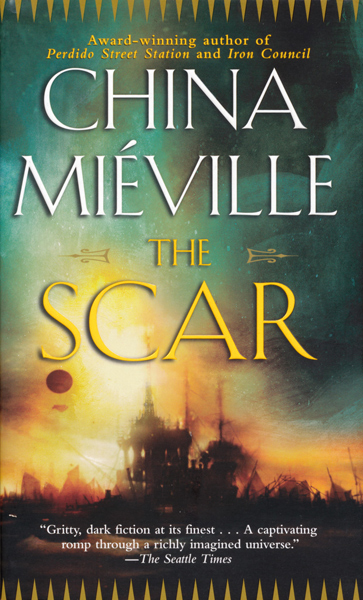
One of my friends offered me the loan of The Scar whenever I wanted to borrow it.  When I started Gravity's Rainbow I decided that The Scar would be next.  When I finally made it to the end of Gravity's Rainbow I still wanted to read it (and I had hopes that it would be less stressful).  Right before I started I learned that The Scar is part of a shared world which currently comprises three books and The Scar is the second (!) chronologically of those three.  After some reassurances from my friend that the order did not matter significantly, I embarked on the journey that was The Scar.


China Miéville has crafted a full world that he calls Bas-Lag.  There are so many different species and cultures that it feels like this is a world that has been fleshed out a lot more than just three books.  For some authors, an attempt to do something like this would seem confusing at best and at worst like the author was being needlessly complex but China Miéville pulls it off.

I have to say, the end of the book felt a little contrived but after I started to get miffed about how contrived it was, the characters started talking about how they felt certain events were a little contrived.  That made me feel better and added an interesting dimension to some of the characters.

This book has some great plot twists.  Some characters aren't who they seem and some items are not what they seem.  Allegiances are murky and twisted. I will admit that I am not one of those people that has an easy time predicting plot twists, but there were a lot of surprises for me in this book.

The places within the world that the book goes are fantastical but at the same time plausible.  The battle scenes are very well done and make me wish that there were more of them. I am sure at some point in the near future I will be reading more by him.

Overall, I would give this book a 91%.

Thursday, September 6, 2012

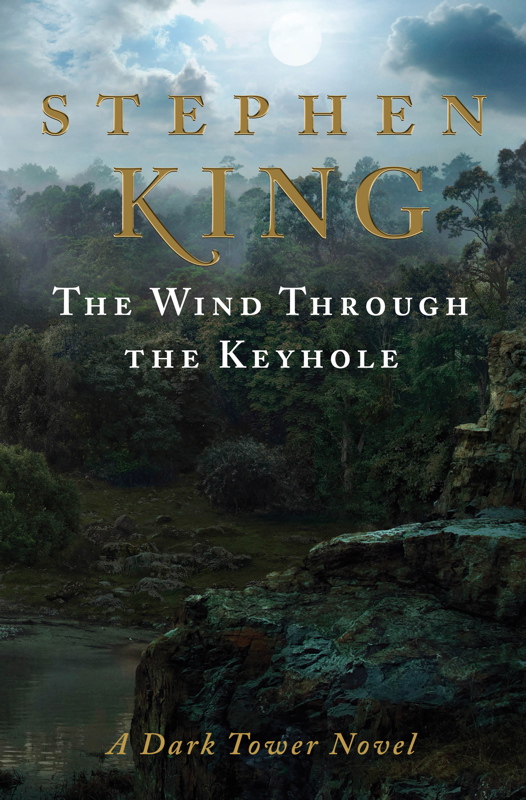
The Wind Through the Keyhole

When I was significantly younger, my uncle lent my mother a copy of Stephen King's The Gunslinger as an audiobook on the way back from New Jersey.  About 45 minutes in there was a sex scene and my mother shut it off (I cannot really blame her.  I am not sure that I would want to listen to a sex scene with my single digit age child).  However, the idea of a cowboy trekking across a desert stuck with me.  Then when I was in high school, I went through a phase where I would spend a lot of time at the local library reading whatever piqued my interest.  There I found The Gunslinger again and all the other books in the Dark Tower series.  I found the series greatly entertaining despite some of its flaws and the protagonist, Roland, was a hero I could get behind, especially in the fourth book Wizard and Glass which recounts an adventure from his younger days.  In addition, the way that the series ends in book seven was really, at the time, quite novel to me.

In March of last year, Stephen King, one of the most prolific authors, announced that he was going to be producing a book to come in between the 4th and 5th books in the time line entitled The Wind Through the Keyhole.  My initial reaction was excitement because I am a sucker for a continuing story.  My love of the Star Wars canon probably stems in a large part from the fact that it is one long continuing story.  However, that was overtaken by trepidation, was this just some publicity trick?  It has been a while since I read the series, but I don't remember much space between 4 and 5.  However, being the faithful fan, I preordered it and avoided most of the information about it.

When I finally read it, I realized that it had a very interesting format.  There is a frame story about the series' protagonists listening to Roland tell a story about his younger days.  However, as part of that story, he tells a story he heard as a child to someone else and the readers must dutifully follow him into a frame story within a frame story and then back out, one level at a time.  (kinda Inception-esque)  Not that this is bad, but I am not sure that I have ever read a book with (relatively long) stories three layers deep.

I thought that the story that was at the middle level was significantly better than the other two and wished that it had been fleshed out more.  On reading, it is pretty obvious that the deepest story is the one that he really wanted to tell but he wanted to tie it to characters that people would recognize from the other books.

If you are a fan of Stephen King in general and are picking this up to read something in his style, I would not recommend it.  It is more like his normal fare than the other Dark Tower books but it is certainly not horror or even suspense.  If you are hoping for a normal science fiction or fantasy story, however, this really isn't one of those either. There are a lot of things that go pretty much unexplained unless you have read the other books (and some that are weird even if you have).  However, if you liked the world of the Dark Tower, this a great reminder of what it was like.  Little things like the lexicon and the way that certain events happened were a great throwback to the last time that I read them and brought me many happy memories.

Perhaps this will get more people interested in the Dark Tower series but I cannot honestly believe that it will.  If someone was interested in reading the Dark Tower series, I would definitely hand them The Gunslinger first without even thinking about The Wind Through the Keyhole.  It is the difference between teaching someone to swim in a wading pool or in the deep end with weights on their legs.

In short, if you enjoyed the Dark Tower, you probably owe this a read.  If you are interested in the Dark Tower, read at least the first four books first, if not the seven who have come out before this.  I would give this book a 79%.
Friday, May 25, 2012

The Spirit Ring

I bought The Spirit Ring by Lois McMaster Bujold on a whim.  It was on sale, in a genre I generally enjoy (Sci-fi/fantasy), and looked interesting.  The book is set in a renaissance Europe with one minor change: magic is real. The ramifications of that premise, which is an interesting one, are not fully explored, though they are hinted at in interesting ways. 

The book works through the viewpoint of two protagonists, a male and a female.  The book somewhat toys with how cliche this dynamic is.  While it is clear that they are going to fall in love, based on the story telling formula, the book comes right out and tells you it is going to happen through a magic ring.  The story then changes from a relatively obvious will they/won't they dynamic to the more interesting how dynamic.

The most compelling character in the book though was the villain.  Unlike many books, this humanizes him, without redeeming him.  At one point the book talks about how angels weep for sinners (Side note: The book is very heavy with Christianity, however it makes sense for a story set in that time period) not for the evil, but for the good that is wasted in that evil.  I thought that was a pretty poignant remark.  If I remember anything from this book, it will be that.

The book does not raise any interesting philosophical questions and will not leave you awake at night worrying about the characters, but it is a fun read.  If you are looking for a fantasy book that is fun for all ages, I recommend  picking it up.

Overall, I would give this book a 83%.